zx Krishiv Aggarwal — ECE ePortfolio

Hi, I’m Krishiv Aggarwal.

EE/CE builder focused on power electronics, RF/beamforming, and embedded systems. I like taking ideas from a schematic to a tested board—and documenting real measurements, tradeoffs, and lessons here.

About Me

I’m an Electrical/Computer Engineering student at Georgia Tech who enjoys hands-on hardware. My interests span analog/mixed-signal design, RF front-ends and antennas, and power conversion. I care about building reliable systems and presenting results clearly—whether that’s bench captures, S-parameters, or efficiency curves.

Focus Areas

  • Power Electronics — DC–DC topologies, gate drivers, efficiency & thermal
  • RF/Beamforming — Rotman lens concepts, phase error & layout constraints
  • Embedded/Digital — FPGA/VHDL basics, microcontrollers, board bring-up

Tools

  • KiCad / Altium for PCB design
  • MATLAB, Python, C, Java; Quartus, ModelSim
  • Scopes, logic analyzers, soldering (T/H & SMT)

I’m an Eagle Scout and a former Senior Patrol Leader; I like projects that involve both hands-on problem solving and leadership.

Resume

Download my latest resume (PDF) tailored for hardware roles (power, RF, embedded).

Download Resume
  • Hyve Solutions — Hardware Engineering Intern; automated failure-analysis pipelines and improved QA throughput.
  • VIP Research — Power electronics (boost converter PCB); RF beamforming (Rotman lens modeling & phase error).
  • SSI CubeSat — Electronics lead: solar board, flight controller, RF modules; avionics test/verification.

For details on roles, timelines, and coursework, see the sections below and LinkedIn.

Career Goals

Long-Term Vision

Contribute to robust, manufacturable hardware—especially RF front-ends and high-efficiency power stages. I want to own designs end-to-end: modeling → layout → bring-up → validation.

Near-Term Plan

  1. Complete targeted electives in RF/microwave and power.
  2. Design, fab, and test at least two boards per year with documented results.
  3. Deepen measurement practice: Bode, load-step, EMI pre-compliance, and S-parameters.
  4. Contribute to VIP/research; present outcomes and share open materials where possible.
  5. Pursue hardware internships/co-ops and iterate on this portfolio with real data.
2025Power/RF VIP research; Hyve internship; Discovery Project expansion.
2026Advanced electives; multi-board projects; Summer internship; graduation prep.
Post-gradHardware design role (power/RF/embedded); graduate studies possible later.

Technical Projects

Power Electronics

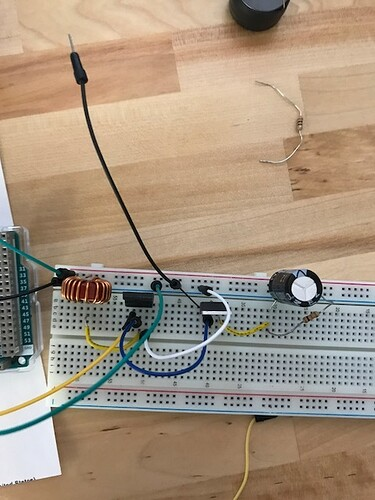
10→20 V Boost Converter PCB (200 mA)

Boost converter PCB on bench

Boost converter PCB prototype on test bench.

KiCad • PWM control (10–90%) • Gate driver • Bench validation

Designed and tested a compact boost converter targeting a regulated 20 V at 200 mA. Implemented a gate driver and PWM control with attention to switch-node layout, current ripple, and thermal considerations. Bench validation includes load steps, ripple measurement, and efficiency sweeps.

  • Validated stable output and duty ramp under varying load.
  • Planned improvements: snubber tuning; EMI pre-checks; thermal imaging.
Open Discovery Project page →
RF / Beamforming

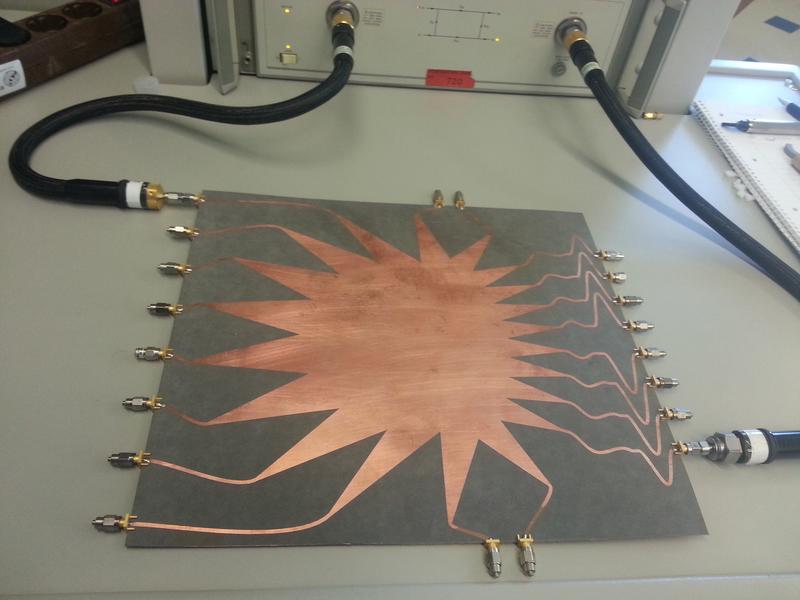
Rotman Lens Concept — Multi-Focal Beam Steering

Rotman lens geometry simulation

MATLAB-simulated Rotman lens geometry showing multiple focal points.

MATLAB • Geometry synthesis • S-parameter simulation

Synthesized a three-focal-point lens and assessed non-focal phase error via simulation. I’m exploring PCB-friendly geometries, equal-path constraints, and port transitions. Future work will compare layout variants and quantify beam pointing accuracy vs. frequency.

Space Systems

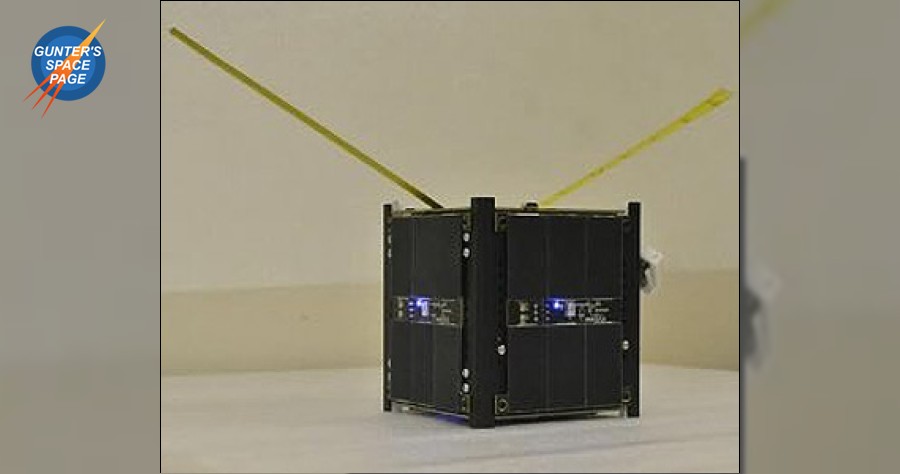
SSI CubeSat — Electronics Lead

SSI CubeSat avionics and solar board

CubeSat solar board and avionics integration under test.

KiCad • Solar board • Flight controller • RF modules • Avionics test

Contributed to a student nanosatellite program handling power and comms boards, plus avionics testing. The team also developed a low-cost assembly workflow (pick-and-place + reflow) to keep iteration fast.

  • Solar board and flight controller designs meeting power/comms budgets.
  • Pick-and-place and reflow process kept assembly under $2,000.
  • Avionics testing and verification practices ahead of launch.
Industry

Hyve Solutions — Hardware Engineering Intern

Failure testing • Python automation • Neo4j • Excel macros

Built automation for debug and QA workflows and conducted rigorous failure testing on server hardware. The pipeline reduced diagnostic time and helped improve reliability by tightening feedback loops.

  • Automated fault analysis with Python + Neo4j; cut diagnostic time by ~30%.
  • Optimized QA pipeline integration; ~25% faster validation cycles.